The highlights of Romania (Transylvania, Bucovina, and Maramureș) in just 8-day customized tour include discovering the cultural blend (Romanians, Hungarians, Jews, Saxons, Ukrainians, and Gipsy) and meeting locals at their homes.
Itinerary:
Day 1. Leave Cluj-Napoca for Turda Salt Mine, a stunning underground complex. Reach Sibiu, formerly the chief city of the Transylvanian Germans. The Great and Lesser Squares are the landmarks of the Old Town, with the merchant houses featuring “”sleepy eye” dormers. View the Liars Bridge, the defense walls, and the remaining towers belonging to the merchant guilds. Overnight in Sibiu.
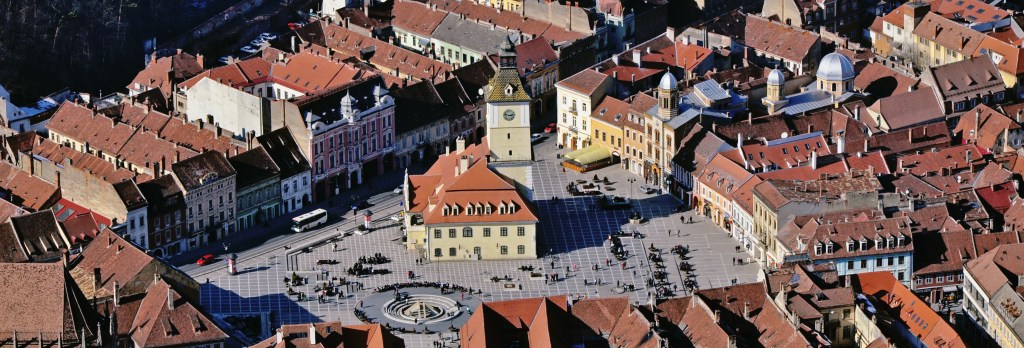
Day 2. Visit Brukenthal Palace, a gem of Baroque architecture. Next is the Gothic Evangelical Cathedral, completed in its actual shape in 1520. Move to Brașov, where you can see the Council Square, Catherine’s Gate, the Guild Towers, Schei Quarter, and the narrow Rope Street. Walk in the lovely pedestrian area of the Old Town, with its many restaurants and outdoor cafes. Overnight at Brașov.
Day 3. Visit Brașov’s huge Gothic Black Church, featuring a collection of precious Anatolian rugs. Drive to the Gothic Bran Castle (known as „Dracula Castle”). This medieval structure was built in 1377 to safeguard the trading route between Transylvania and Wallachia and has been enlarged and restored a few times to become a royal residence in the 1920s under Queen Marie of Romania. Visit Peles Castle and Gardens in Sinaia, the royal residence of King Charles I of Romania and known as one of the most beautiful summer royal residences in Europe. Overnight in Brașov.
Day 4. See Viscri village, a travel destination on its own. Its pastoral landscapes, traditional houses, local artisans, and the support of the Foundation Mihai Eminescu Trust and King Charles III’s visits have transformed this old village into one of the trendiest attractions in the region. Enter its white fortified church, included in the UNESCO World Heritage Sites. Arrival at Sighișoara, another UNESCO Site and one of the few inhabited medieval citadels in Europe, the birthplace of Vlad the Impaler („Dracula”). According to a myth, this is where the Pied Piper brought the children of Hamelin after their ungrateful parents refused to pay him his due. The walking tour includes the two squares of the Citadel (Upper Town), the two medieval Gothic churches, the Scholars’ Staircase, and the Clock Tower. Overnight in Sighișoara.
Day 5. Cross the mountains to Moldavia through the Hungarian Szeklers community area. See the spectacular Red Lake, formed by an accidental mountain drift in 1838. Cross the Bicaz Gorges, where the surroundings are dramatic. See Agapia convent (one of Europe’s largest, with 400 nuns, an entire monastic village with over 100 houses), with great rugs-making and textile-working nun-run workshops. Enter Bucovina, with its monasteries—outstanding gems of medieval Moldavian architecture and artistry. See Voroneț monastery (UNESCO), the most famous out of all, known as „the Sistine Chapel of the East” and featuring one of the best Last Judgment frescos. Overnight in Gura Humorului.
Day 6. Visit the 16000 egg collection of the Vama Egg Museum. See Moldovița Monastery, a UNESCO monument, where the Golden Apple Award was given to the painted churches in 1975. Cross Ciocănești village, with its painted houses, then the Northern Carpathian Mountains, through the picturesque Prislop Pass into Maramureș. Extremely conservative, the local people have developed a particularly strong community with a unique personality, traditions, culture, and lifestyle unspoiled for centuries, with their local dowry tradition, the hay culture, the medieval-style farming, or the wonderfully carved wooden gates. On Iza Valley, at Săcel, see a pottery workshop and a small wooden object carver, then at Botiza, a UNESCO-recognized vegetal dyed rug maker. Great scenery. Overnight in the Botiza area.
Day 7. Visit a famous wood workshop and Bârsana Convent, the most famous Maramures landmark. In the afternoon, see the Sighetu Marmatiei Memorial of the Victims of the Communism (a political prison in the ancient regime, one of the main memorial sites of the continent, alongside the Auschwitz Museum and the Peace Memorial in Normandy), the Elie Wiesel Memorial House (the Jewish museum), and the famous “Merry Cemetery“ of Săpânța. There, the wooden crosses carry sometimes funny epitaphs about the person’s life. Overnight in Sighetu Marmației.
Day 8. On Cosău Valley, at Sârbi, see the local ancient-type plum brandy distillery, a typical water mill, and a whirlpool still used by the local women to wash heavy woolen blankets. Visit the Budești-Josani UNESCO wooden church and Breb village. Drive back to Cluj-Napoca.
Starting and ending in Cluj-Napoca, this tour includes accommodation with breakfast (7 nights, based on double-room sharing in a 3-star facility), the guiding fee, transport, and all entrance tickets.
Price: 1290 euros per person for a group of two people.
For other group sizes, the price may be different.
For booking, other conditions, itinerary, tour length (7–15 days), and more information, please fill out the form or contact me by WhatsApp or email.
 Private tours of Maramures, Bucovina, Transylvania, and beyond